Abnormal & Heavy Menstrual Bleeding
- Answers for periods that have changed.
Periods that suddenly become heavier, longer, closer together, or unpredictable are common, especially in your 40s. But they shouldn’t be ignored or simply blamed on age.
At Women’s Health Group in Chicago, Dr. Awad and our care team look for the reason your bleeding has changed, check how it is affecting your overall health, and help you choose a treatment that fits your life.
- 30+ years caring for women
- In-office ultrasound and testing
- Board-certified OB-GYN care
- Medical and procedural options
Our Services
What is Abnormal Uterine Bleeding?
Medically reviewed by Michael M. Awad, DO, OB-GYN
Abnormal uterine bleeding, or AUB, means bleeding that is different from your usual pattern in timing, amount, or length. It includes periods that are much heavier than usual, bleeding that lasts longer than seven days, and bleeding between periods or after sex.
Hormone changes during perimenopause are a common cause, but not the only one. Fibroids, polyps, adenomyosis, thyroid problems, medications, and changes in the uterine lining can all cause similar bleeding, which is why an evaluation matters.
Any bleeding after menopause should be checked.
Once you have gone 12 months without a period, any new bleeding or spotting deserves a prompt evaluation.
Bleeding Warning Signs You Should Never Ignore
Call us if you notice:
- Bleeding that soaks through a pad or tampon quickly, or passing large clots
- Periods that last longer than 7 days
- Bleeding between periods or after sex
- A sudden change in your periods, especially after age 40
- Fatigue, dizziness, or shortness of breath, which can be signs of anemia
- Any bleeding after menopause
If something doesn’t feel right, trust your instincts and reach out at (773) 992-1555. For emergencies, call 911 or go to the nearest emergency room.
- Comfort at Every Step
Strategies for Comprehensive Care
Finding the Cause
We look for why your bleeding changed, whether it's hormonal, structural like fibroids or polyps, or related to medications or the uterine lining.
In-Office Evaluation
Much of your evaluation, including ultrasound and, when needed, sampling of the uterine lining, can often be done right in our office.
Checking Your Overall Health
Heavy bleeding can lead to low iron and anemia, so we look at how it is affecting your energy and overall health, not just your period.
Treatment That Fits Your Goals
Whether you want a future pregnancy, need birth control, or are done having children, your goals help shape the right treatment.
Heavy Periods in Your 40s
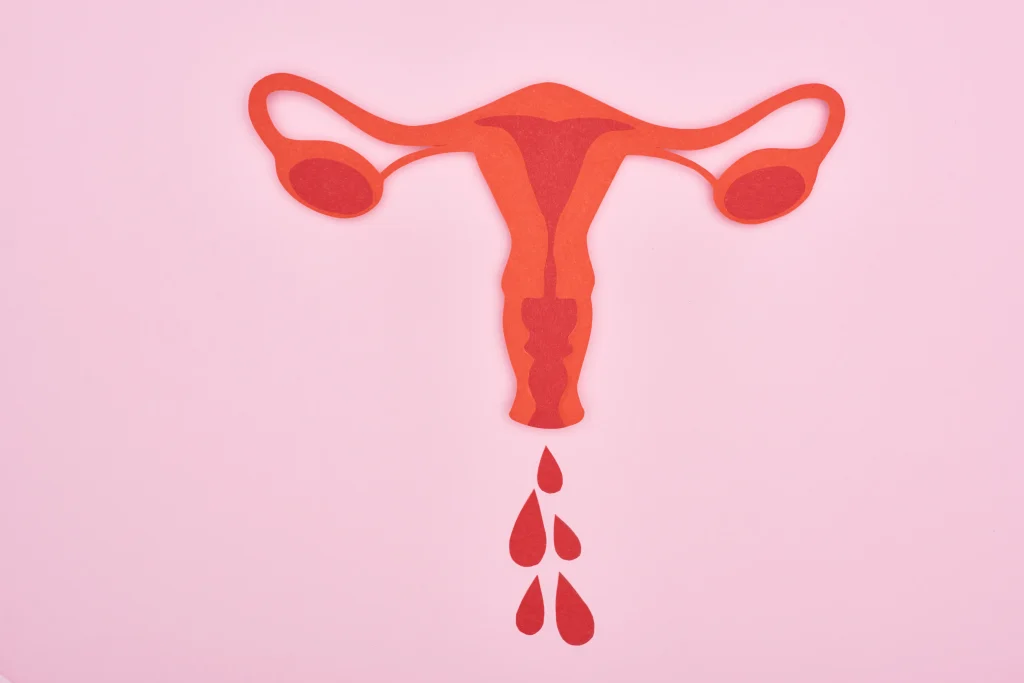
During perimenopause, ovulation becomes less predictable, and periods can become heavier, longer, or irregular. But a big change in your bleeding shouldn’t automatically be blamed on hormones.
New bleeding patterns in your 40s can sometimes signal changes in the uterine lining that are best found early. Learn more in our posts on heavy periods in your 40s and abnormal uterine bleeding.

- Care That Fits Your Life
The Personal Nature of Bleeding Care
Your Normal Matters
A big change from your usual pattern can be important, even if the numbers don't look extreme. We start with what's normal for you.
Treating the Whole Person
Sleep, energy, hot flashes, birth control needs, and future pregnancy plans all matter. We treat the bleeding and the person who is bleeding.

Your Bleeding Evaluation Journey:
History
We talk about when your bleeding changed, how heavy it is, how it's affecting your life, and your health history and goals.
Testing
Depending on your needs, testing may include blood work, a pregnancy test, a pelvic ultrasound, or a small sample of the uterine lining.
Treatment
We explain what we found and walk through the options that fit the cause and your goals, from medication to procedures.

Treatment depends on the cause of your bleeding, how heavy it is, and whether you want a future pregnancy. Many women have options that don’t involve major surgery.*
*Not every option is right for every woman. Talk with Dr. Awad about which treatments fit your situation.
Medication
Hormonal and non-hormonal medications can reduce heavy bleeding or help regulate your cycle, depending on the cause and your health history.
Hormonal IUD
A hormonal IUD can greatly reduce heavy bleeding for many women and also provides birth control. Learn more about the IUD.
Hysteroscopy
Lets us look directly inside the uterus to find, and in some cases treat, polyps or fibroids that may be causing the bleeding.
Endometrial ablation and hysterectomy
For women who are done having children, ablation can reduce heavy bleeding. A hysterectomy may be discussed when other options aren’t enough.
Common Bleeding Questions We Hear Most
Are heavy periods in my 40s normal?
They can happen during perimenopause, but bleeding that is very heavy, prolonged, new, or disruptive should be evaluated.
Do I need an endometrial biopsy?
It may be recommended for abnormal bleeding at age 45 or older, or earlier with certain risk factors or bleeding that persists.*
*Dr. Awad will recommend the testing that is right for you.
Can heavy bleeding be treated without surgery?
Yes. Depending on the cause, options may include a hormonal IUD, other hormonal therapy, or non-hormonal medication.
Is endometrial ablation a form of birth control?
No. Pregnancy can still happen after ablation and may be high risk, so you’ll still need birth control until menopause.

Michael M. Awad, DO, OB-GYN
Dr. Mike Awad is a second-generation OB-GYN whose areas of focus include uterine fibroids, abnormal bleeding, endometriosis, and pelvic pain. As a skilled robotic gynecologic surgeon, he favors minimally invasive treatment while recognizing that surgery is not always the first or best answer. His philosophy is simple: meet every patient where she is, listen carefully, and make sure she feels understood and confident in her care.
Your comfort, privacy, and dignity come first
Talking about your periods and bleeding can feel personal, and exams can make anyone nervous. You deserve care that is gentle, patient, and respectful. Here is our promise to you.
Your comfort is our priority
We never rush your exam or ultrasound, and you can ask us to pause at any time.
We explain first, then proceed together
Before every step, we walk you through what to expect and why, in plain language and at your pace. You can ask us to pause at any time.
Your choice is respected
Whether you choose medication, a procedure, or more time to decide, the decision is always yours.
Your information stays private
Your conversations and records are protected, and follow-up messages go through our secure patient portal.
You Don't Have to Just Live With It
Abnormal and heavy bleeding care for women across Chicago’s Southwest Side, including Garfield Ridge, Clearing, Burbank, Oak Lawn, Bridgeview, and Summit. New patients are welcome. Most major insurance accepted.